
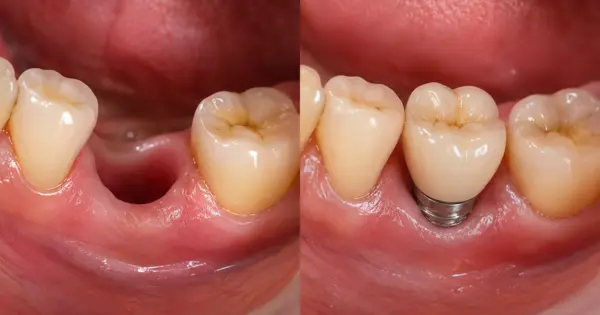
How Long After Tooth Extraction Can You Get a Dental Implant?
One of the first questions patients ask after having a tooth removed is:
“How long do I need to wait before getting a dental implant?”
The answer may surprise you—it isn’t the same for everyone.
Some patients can have a dental implant placed on the same day as their tooth extraction, while others may need to wait a few months for the jawbone to heal. The right timing depends on several factors, including the condition of your bone, whether there was an infection, and how your mouth heals after the extraction.
If you’re considering dental implants in Bangalore, the goal isn’t to place the implant as quickly as possible. It’s to place it at the right time for the best long-term result.
Can You Get a Dental Implant Immediately After Tooth Extraction?
Yes—but only if the conditions are right.
This procedure is called immediate implant placement, where the implant is placed into the socket soon after the tooth is removed.
Patients often assume everyone can have this treatment, but that’s not always the case.
Your dentist will first check:
- Whether there’s enough healthy bone to support the implant.
- If the tooth was removed without damaging the surrounding bone.
- Whether there’s an active infection.
- The condition of your gums.
If everything looks healthy, placing the implant immediately can reduce treatment time and help preserve the natural shape of the bone.
However, immediate placement isn’t automatically the “better” option. Choosing the right timing is always more important than choosing the fastest one.
Why Do Some Patients Need to Wait?
Many people worry when they’re told to wait for a few months, but waiting is often the safest decision.
For example, your dentist may recommend delaying implant placement if:
- The extracted tooth had a severe infection.
- There isn’t enough healthy bone to hold the implant securely.
- A bone graft is needed.
- The extraction was complex and the area needs time to heal.
Trying to place an implant before the mouth is ready can reduce the chances of long-term success.
Healing first often leads to a stronger foundation and a more predictable outcome.
When Can You Get a Dental Implant After Tooth Extraction?
While every case is different, the table below gives a general idea of when dentists may recommend immediate implant placement and when waiting is the better option.
| Situation | Typical Approach |
| Healthy bone, healthy gums, and no infection | Immediate implant placement may be possible after tooth extraction. |
| Tooth removed because of a severe infection | The area usually needs time to heal before an implant can be placed. |
| Significant bone loss after extraction | A bone graft may be recommended before implant treatment. |
| Complex or surgical tooth extraction | Your dentist may monitor healing before deciding the best time for an implant. |
| Missing tooth for several months or years | A bone assessment is usually needed to determine whether additional treatment is required before placing the implant. |
What Happens If You Wait Too Long?
While healing is important, waiting too long after an extraction can also create challenges.
Once a tooth is removed, the jawbone naturally begins to shrink because it no longer receives stimulation from the tooth root. Over time, nearby teeth may slowly drift into the empty space, and the opposing tooth can begin to move as well.
In some cases, significant bone loss means additional procedures—such as bone grafting—may be needed before an implant can be placed.
This doesn’t mean you’ve missed your chance for an implant, but it may make treatment more complex than if it had been planned earlier.
That’s why it’s a good idea to discuss your replacement options soon after an extraction, even if the implant won’t be placed immediately.
How Does Your Dentist Decide the Right Time for an Implant?
Many patients ask, “Can you tell me today exactly when I’ll get my implant?”
The answer is usually yes—but only after a proper examination.
Rather than following a fixed timeline, your dentist looks at several important factors:
- Has the extraction site healed properly?
- Is there enough healthy bone to support the implant?
- Are your gums free from infection?
- Do you have any medical conditions that may affect healing?
- Does a CBCT scan show enough bone for long-term stability?
This is why two patients who have the same tooth removed may receive completely different treatment timelines.
If you’re unsure whether you’re ready for implant treatment, our guide on who is a good candidate for dental implants explains what dentists look for before recommending the procedure.
Will a Bone Graft Delay My Dental Implant?
Not always.
Many patients hear the words “bone graft” and assume they’ll have to wait several months before getting an implant.
In reality, it depends on how much bone has been lost.
In some cases, a small bone graft can be placed at the same time as the implant. In other situations, especially when significant bone loss is present, your dentist may recommend allowing the graft to heal before implant placement.
The goal isn’t to make treatment longer—it’s to create a strong, healthy foundation that improves the long-term success of your implant.
Is It Ever Too Late to Get a Dental Implant?
This is another question we hear regularly.
The good news is that it’s rarely too late.
Even if you’ve been missing a tooth for several years, you may still be a suitable candidate for a dental implant.
However, waiting for a long time can increase the chances of bone loss, which may mean additional procedures are needed before treatment.
If you’ve already lost a tooth, it’s worth having an assessment sooner rather than later. Even if you’re not ready to begin treatment immediately, knowing the condition of your bone helps you plan ahead.
Don’t Rush the Process—Choose the Right Timing
Getting a dental implant isn’t about placing it as quickly as possible. It’s about placing it when your mouth is ready.
At Dentistree Advanced Dental & Implant Center, every implant treatment begins with a detailed clinical examination and digital imaging. This helps us determine the safest time to place your implant and create a treatment plan that’s designed for long-term success.
If you’re considering dental implants in Bangalore, scheduling an early consultation allows us to assess your healing, discuss your options, and recommend the right treatment timeline for your smile.
You may also find our guide on how long dental implants last helpful if you’re planning for a long-term tooth replacement solution.
Frequently Asked Questions
1. Can I get a dental implant on the same day as my tooth extraction?
Yes, some patients are suitable for immediate implant placement. Your dentist will decide after evaluating your bone and gum health.
2. How long do most people wait after a tooth extraction?
Many patients wait around 2 to 4 months, but the ideal timing depends on healing and your individual case.
3. Will I always need a bone graft before a dental implant?
No. Bone grafting is only recommended when there isn’t enough healthy bone to support the implant.
4. What happens if I wait too long after a tooth extraction?
Over time, the jawbone can shrink, and nearby teeth may shift, which can make implant treatment more complex.
5. How do I know if I’m ready for a dental implant?
A clinical examination and CBCT scan help your dentist determine whether the extraction site has healed and if there’s enough bone for an implant.
6. Can I still get a dental implant years after losing a tooth?
Yes. Many patients successfully receive implants years later, although additional treatment such as bone grafting may sometimes be required.
Sources:
AAID
Mayo Clinic

Dr. Samreen Farrah Siddiqui is a compassionate and experienced dental professional dedicated to providing exceptional oral care. A trusted dentist in Bangalore, she is the founder of Dentistrée Advanced Dental Center in Bangalore, offering a wide range of treatments, including general, orthodontic, restorative, and cosmetic dentistry. With a strong commitment to ethical practice and long-term oral health, Dr. Samreen Farrah Siddiqui ensures every patient receives personalised, high-quality dental care in a welcoming environment.