
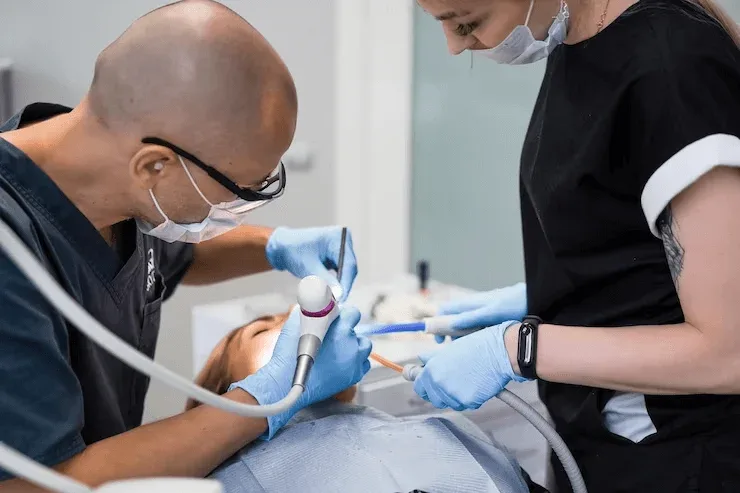
Root Canal Treatment Recovery Aftercare Instructions
If you have recently undergone a root canal treatment (RCT), it is normal to experience mild discomfort or sensitivity for a few days.
Following proper post-operative care after root canal treatment helps ensure faster healing and protects the treated tooth until the final crown is placed.
At Dentistree Advanced Dental & Implant Center, we guide our patients through every step of the recovery process to ensure long-term success of their root canal therapy.
1. Numbness After Root Canal Treatment
Your mouth may remain numb for 2–4 hours after the procedure due to local anesthesia.
Precautions:
• Avoid chewing or biting until the numbness wears off.
• Be careful not to bite your lips, tongue, or cheeks.
2. Mild Pain or Sensitivity Is Normal
Some patients experience mild pain or pressure in the treated tooth for a few days.
You may notice:
• Sensitivity while chewing
• Mild soreness in the jaw
• Slight tenderness around the tooth
This usually improves within 3–5 days.
3. Take Prescribed Medications
Your dentist may prescribe medications to control pain and infection.
• Take painkillers and antibiotics exactly as directed.
• Do not skip doses.
• Complete the full course of antibiotics if prescribed.
4. Avoid Chewing on the Treated Tooth
Until the final dental crown is placed, the treated tooth may be weaker.
Avoid chewing on that side to prevent:
• Tooth fracture
• Damage to the temporary filling
• Reinfection of the root canal.
5. Eat Soft Foods Initially
For the first 24 hours, eat softer foods.
Recommended foods:
• Yogurt
• Khichdi or rice
• Soup
• Mashed vegetables
• Scrambled eggs
Avoid:
• Hard foods
• Sticky foods
• Crunchy snacks
6. Maintain Good Oral Hygiene
Brush and floss normally but avoid aggressive brushing around the treated tooth.
Maintaining good oral hygiene helps ensure long-term success of root canal treatment.
7. Temporary Filling Care
A temporary filling may be placed in the tooth after the procedure.
• Avoid chewing sticky or hard foods.
• If the temporary filling falls out, contact your dentist immediately.
8. Swelling After Root Canal Treatment
Swelling is uncommon but may occur if infection was present before treatment.
If swelling occurs:
• Apply a cold compress for 10 minutes
• Take prescribed medications
Contact your dentist if swelling worsens.
9. Get the Permanent Crown on Time
A tooth that has undergone root canal treatment can become brittle over time.
A dental crown helps:
• Protect the tooth from fracture
• Restore chewing strength
• Increase longevity of the treated tooth
When to Contact Your Dentist
Contact your dentist if you experience:
• Severe pain lasting more than a few days
• Increasing swelling
• Temporary filling falling out
• Persistent bad taste or discharge
Frequently Asked Questions
How long does pain last after root canal treatment?
Mild discomfort usually lasts 3–5 days and gradually improves.
Can I eat normally after root canal treatment?
Yes, but avoid chewing on the treated tooth until the crown is placed.
Why do I need a crown after root canal treatment?
A crown protects the treated tooth from fracture and improves durability.
About the Author
Dr. Samreen Farrah Siddiqui
Dental Surgeon
Dentistree Advanced Dental & Implant Center
202, I Main Rd, Arekere MICO Layout 2nd Stage
Arekere, Bengaluru, Karnataka – 560076

Dr. Samreen Farrah Siddiqui is a compassionate and experienced dental professional dedicated to providing exceptional oral care. A trusted dentist in Bangalore, she is the founder of Dentistrée Advanced Dental Center in Bangalore, offering a wide range of treatments, including general, orthodontic, restorative, and cosmetic dentistry. With a strong commitment to ethical practice and long-term oral health, Dr. Samreen Farrah Siddiqui ensures every patient receives personalised, high-quality dental care in a welcoming environment.