
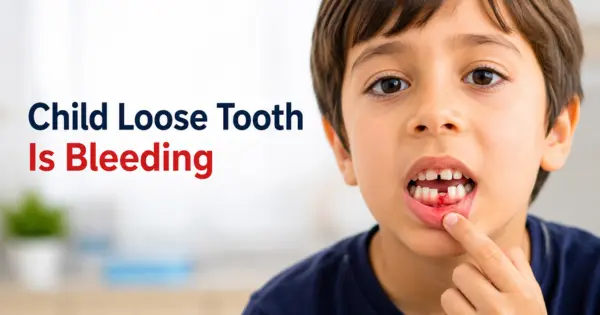
Child Loose Tooth Bleeding: Is It Normal?
Seeing blood around your child’s loose tooth can be worrying. Many parents immediately wonder if something has gone wrong.
““Did the tooth come loose too early?”
“Should I pull it out now?”
“Is the bleeding a sign of an infection?”
If these questions are running through your mind, you’re not alone. We hear them often from parents visiting our pediatric dentist in Bangalore.
The good news is that, in most cases, a small amount of bleeding around a loose baby tooth is completely normal. As the permanent tooth grows underneath, it slowly pushes the baby tooth out. During this natural process, the gums around the tooth may become slightly irritated, which can cause a little bleeding.
Knowing what’s normal—and what isn’t—can help you care for your child with confidence. In this guide, I’ll explain why a loose tooth may bleed, what you can do at home, and when it’s time to seek professional pediatric dental care.
Is It Normal for a Child’s Loose Tooth to Bleed?
Yes, a small amount of bleeding is usually normal.
As a baby tooth becomes looser, it moves slightly every time your child eats, brushes, or gently wiggles it. This movement can irritate the gum tissue around the tooth, causing a few drops of blood.
Many children also enjoy touching or wiggling their loose tooth throughout the day. While this is common, frequent touching can make the gums more sensitive and increase the chance of mild bleeding.
If the bleeding stops within a few minutes and your child is otherwise comfortable, there’s usually no reason to worry.
Why Does a Loose Baby Tooth Bleed?
There are several normal reasons why this can happen.
One of the most common is that the permanent tooth underneath is slowly pushing the baby tooth out. As this happens, the tissues around the tooth naturally begin to change.
Other common reasons include:
- Your child has been wiggling the tooth often.
- The tooth moved while eating crunchy or hard foods.
- Brushing accidentally irritated the gums.
- The tooth is almost ready to fall out.
In these situations, a little bleeding is simply part of the natural process.
However, if the tooth looks badly damaged, has a large cavity, or the gums are swollen and painful, the bleeding may have another cause. In these cases, your child may need child tooth decay treatment to treat the problem before it affects nearby teeth.
What Should Parents Do If a Loose Tooth Starts Bleeding?
The first thing is to stay calm. Seeing a small amount of blood can look alarming, but it’s often less serious than it appears.
Here’s what I usually recommend to parents:
- Ask your child to rinse gently with clean water.
- Place a clean piece of gauze or a soft cloth over the area and ask your child to bite down gently for a few minutes.
- Encourage them not to keep touching or wiggling the tooth while the bleeding settles.
- Continue brushing the rest of the teeth as normal, but be gentle around the loose tooth.
Avoid trying to pull the tooth out just because you notice a little bleeding. If it isn’t ready, forcing it out can make your child uncomfortable and cause more bleeding than necessary.
When Is Bleeding Around a Loose Tooth Not Normal?
Although a small amount of bleeding is usually nothing to worry about, there are times when your child should be seen by a dentist.
Arrange a dental visit if:
- The bleeding is heavy or doesn’t stop after 10–15 minutes.
- The tooth became loose after a fall or sports injury.
- The gums are swollen, painful, or have pus.
- Your child has a fever along with swelling.
- The loose tooth has a large cavity or looks badly damaged.
If your child has suffered a dental injury or the bleeding is severe, it’s best to seek help from an emergency pediatric dentist as soon as possible.
Should You Pull Out a Bleeding Loose Tooth?
Not necessarily.
Many parents think that if a loose tooth is bleeding, it should be removed immediately. In most cases, that’s not the best approach.
If the tooth is still firmly attached, pulling it too early can cause unnecessary pain and make the bleeding worse. It’s usually better to let the tooth fall out naturally when it’s ready.
However, if the tooth is hanging by a tiny piece of tissue, moves very easily, and your child feels comfortable, it may come out on its own while eating or brushing.
If you’re unsure, a quick visit to a pediatric dentist in Bangalore can give you peace of mind and help avoid unnecessary discomfort for your child.
Common Mistakes Parents Should Avoid
When a child’s loose tooth starts bleeding, it’s easy to panic. Fortunately, avoiding a few common mistakes can help the area heal comfortably.
Try not to:
- Pull the tooth before it’s ready.
- Ask your child to keep wiggling the tooth after it starts bleeding.
- Let your child touch the tooth with dirty hands.
- Ignore swelling, bad breath, or persistent pain.
- Stop brushing your child’s teeth because the area feels sensitive.
Keeping the mouth clean is still important. Gentle brushing helps reduce bacteria and supports healthy gums while the tooth is getting ready to fall out.
When Should You Book a Dental Check-Up?
If the bleeding is mild and stops quickly, your child usually doesn’t need urgent treatment.
However, if you’re worried or the bleeding keeps coming back, it’s always better to have the tooth examined. Sometimes, what appears to be a normal loose tooth may actually be affected by decay or another dental problem.
Regular pediatric dental care helps identify these issues early and keeps your child’s smile healthy as their permanent teeth begin to appear.
Final Thoughts
A small amount of bleeding around a loose baby tooth is usually a normal part of growing up. In most cases, there’s no need to panic. Gentle care, good oral hygiene, and a little patience are often all that’s needed until the tooth falls out naturally.
If the bleeding is heavy, continues for a long time, or your child has pain or swelling, don’t ignore it. Getting professional advice can help prevent further problems and give you confidence that everything is developing as it should.
At Dentistree Advanced Dental & Implant Center, we provide gentle pediatric dental care for children across JP Nagar, Arekere, Hulimavu, Bannerghatta Road, and nearby South Bangalore. Whether it’s your child’s first loose tooth or an unexpected dental emergency, our team is here to help your family with compassionate, child-friendly care.
Frequently Asked Questions
Why is my child’s loose tooth bleeding?
A small amount of bleeding is usually normal as the baby tooth loosens and the permanent tooth begins to grow underneath. However, heavy or ongoing bleeding should be checked by a pediatric dentist.
Should I pull out a loose tooth if it’s bleeding?
No. It’s usually best to let the tooth fall out naturally. Pulling it too early can cause unnecessary pain and increase bleeding.
How do I stop my child’s loose tooth from bleeding?
Ask your child to bite gently on clean gauze or a soft cloth for a few minutes. Avoid touching or wiggling the tooth until the bleeding stops.
When should I worry about a bleeding loose baby tooth?
See a pediatric dentist if the bleeding is heavy, lasts more than 10–15 minutes, follows an injury, or is accompanied by swelling or severe pain.
Can a cavity cause a child’s loose tooth to bleed?
Yes. A cavity or gum infection can sometimes cause bleeding around a loose baby tooth. A dental examination can identify the exact cause.
Should I take my child to a pediatric dentist for a bleeding loose tooth?
If the bleeding is mild and stops quickly, home care is usually enough. If it continues, keeps returning, or your child has pain or swelling, book a visit with a pediatric dentist.

Dr. Samreen Farrah Siddiqui is a compassionate and experienced dental professional dedicated to providing exceptional oral care. A trusted dentist in Bangalore, she is the founder of Dentistrée Advanced Dental Center in Bangalore, offering a wide range of treatments, including general, orthodontic, restorative, and cosmetic dentistry. With a strong commitment to ethical practice and long-term oral health, Dr. Samreen Farrah Siddiqui ensures every patient receives personalised, high-quality dental care in a welcoming environment.