
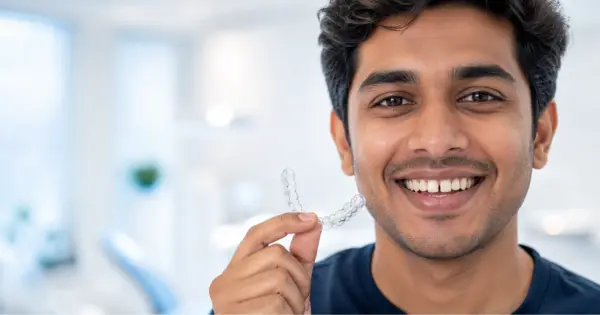
Can Invisalign Fix Gaps Between Teeth? Everything You Need to Know
People usually don’t search this question because they want to know how Invisalign works.
They search because they’re looking at the gap in the mirror and wondering,
“Can this actually be fixed without braces?”
The short answer is yes—but not every gap should be treated in the same way. If you’re considering Invisalign treatment in Bangalore, the first step is understanding why the gap has formed before choosing the right treatment..
At Dentistree, one of the first things we check isn’t the size of the gap. We first find out why the gap is there. Two people may have the same-looking gap, but the treatment plan can be completely different.
For example, if you have a small gap because your teeth naturally grew that way, Invisalign often works very well.
But if the gap appeared recently because of gum disease or loose teeth, simply closing the space isn’t the right first step. The gums need treatment first, otherwise the gap may return even after successful Invisalign treatment.
That’s why a proper examination matters much more than measuring the gap with a ruler.
How Big of a Gap Can Invisalign Fix?
This is probably the most common question we hear.
There isn’t a fixed number like “Invisalign only fixes gaps up to 3 mm.”
Instead, your dentist looks at several things together:
- Where the gap is located.
- Whether it’s only one gap or several spaces.
- Your bite.
- The position of the roots.
- The health of your gums.
- Whether closing the gap will affect your smile or facial appearance.
We’ve seen patients with a noticeable front gap who were excellent Invisalign candidates, while others with a much smaller space needed a different treatment because the underlying cause was different.
So don’t judge your eligibility by the size of the gap alone.
Will You Need Invisalign Attachments?
Not everyone does.
Many small front gaps can be closed with aligners alone.
However, if a tooth needs more control while moving, your dentist may place tiny tooth-coloured attachments on a few teeth.
Patients are often worried when they hear the word “attachment,” but they’re simply small bumps that help the aligners grip the teeth better. Most people don’t even notice them during normal conversations.
Whether you need attachments depends on how your teeth need to move, not on the fact that you have a gap.
How Long Does It Take to Close a Gap with Invisalign?
The honest answer is it depends on your smile, not just the size of the gap.
A small front gap may close within a few months, while multiple gaps or spacing combined with bite problems usually take longer.
During your consultation, your dentist creates a digital treatment plan that shows how your teeth will move at each stage. In many cases, you can even see a preview of your expected smile before treatment begins.
One important point many patients don’t know is that Invisalign only works if you wear the aligners for 20–22 hours a day. Taking them out too often can slow down treatment or affect the final result.
If you’re curious about the overall treatment timeline, you can also learn more about how long Invisalign takes before starting treatment.
Can the Gap Come Back After Invisalign?
Yes, it can—but that doesn’t mean the treatment has failed.
After your teeth have moved into their new position, they naturally try to shift back. This is completely normal.
That’s why every Invisalign treatment ends with retainers. Wearing your retainers as instructed helps keep your teeth in their new position and reduces the chance of the gap reopening.
If the original gap was caused by gum disease, tongue thrusting, or another underlying issue, that condition also needs to be managed. Otherwise, the space may slowly return over time.
Think of Invisalign as moving the teeth into the right position, and retainers as helping them stay there.
When Invisalign May Not Be the Best Option
While Invisalign is an excellent solution for many people, it isn’t the right treatment for everyone.
Your dentist may recommend another approach if:
- Your teeth are loose because of advanced gum disease.
- The gap is caused by a missing tooth that needs replacement.
- The spacing is part of a more complex bite problem.
- The gap is mainly due to the shape or size of the teeth, where cosmetic bonding or veneers may give a better result.
This is why it’s important not to decide your treatment based on photos or social media. A clinical examination and digital scan provide a much clearer picture of what will work best for your smile.
Thinking About Closing Your Gap?
If you’re unhappy with the space between your teeth, the first step isn’t choosing Invisalign—it’s finding out why the gap is there.
At Dentistree Advanced Dental & Implant Center, we use digital scans and a detailed smile assessment to understand the cause of the spacing before recommending treatment. If Invisalign is the right option, we’ll explain the expected timeline, whether attachments are needed, and what results you can realistically expect.
For patients across Arekere, JP Nagar, Bannerghatta Road, and other parts of South Bangalore, this personalized approach helps ensure treatment is both effective and long-lasting.
Frequently Asked Questions
- Can Invisalign close small gaps between front teeth?
Yes. Small to moderate gaps are often treated successfully with Invisalign, provided your teeth and gums are healthy. - Will I need attachments to close my gap?
Not always. Many small gaps can be closed without attachments, but some tooth movements require them for better control. - How long does Invisalign take to fix gaps?
Treatment time varies depending on your smile and the number of teeth being moved. Your dentist can estimate this after a digital scan. - Can large gaps be treated with Invisalign?
Many can, but some cases may need additional treatments such as bonding, veneers, or implants to achieve the best result. - Will my gap reopen after Invisalign?
It can if retainers aren’t worn as advised or if the underlying cause of the gap isn’t treated. - How do I know if Invisalign is right for my gap?
The best way is to have a consultation with an Invisalign provider, who can assess the cause of the gap and create a personalised treatment plan.
Sources:

Dr. Samreen Farrah Siddiqui is a compassionate and experienced dental professional dedicated to providing exceptional oral care. A trusted dentist in Bangalore, she is the founder of Dentistrée Advanced Dental Center in Bangalore, offering a wide range of treatments, including general, orthodontic, restorative, and cosmetic dentistry. With a strong commitment to ethical practice and long-term oral health, Dr. Samreen Farrah Siddiqui ensures every patient receives personalised, high-quality dental care in a welcoming environment.